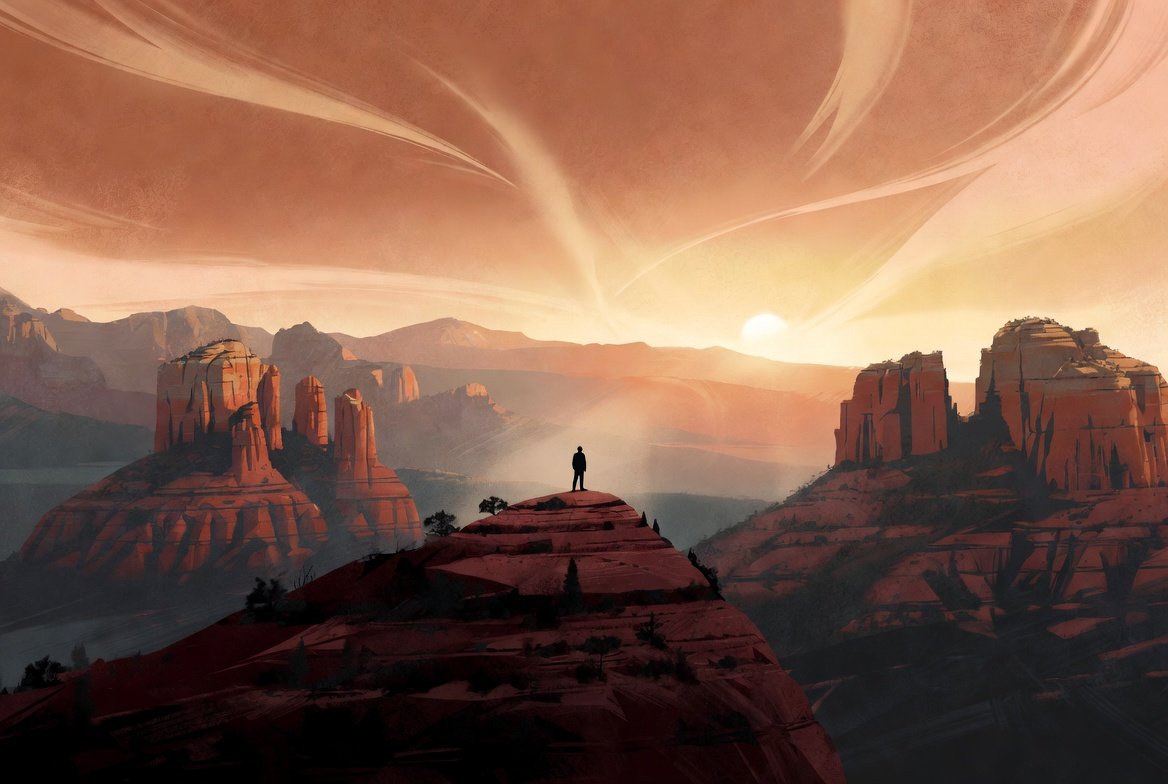
If you’ve spent more than five minutes researching Sedona, you’ve run into the word “vortex.” And if you’re not sure what to make of it, you’re in good company — most visitors aren’t.
Here’s what you actually need to know.
What a vortex is (and isn’t)
A vortex, in the Sedona sense, is a spot where the earth’s energy is said to be concentrated — a place where many people report feeling calmer, more focused, or emotionally moved. Whether that’s geology, magnetism, the placebo effect, or genuine metaphysical energy depends entirely on who you ask.
What’s not in dispute: these are some of the most beautiful spots in Sedona. Even if you’re a complete skeptic, visiting them is worth your time for the views alone. Pine and juniper twist into spiral shapes at several of them — locals call this “vortex bend” and point to it as proof; geologists point to wind patterns. Either way, it’s striking.
The four main vortex sites
Airport Mesa. The most accessible of the four. A short uphill scramble from the parking lot gets you to a flat overlook with 360-degree views. Best at sunrise or sunset. Get there early — parking fills up.
Cathedral Rock. The most iconic. It’s a steep, short hike (0.7 miles each way, but with real scrambling on slickrock). The energy here is said to be “feminine” — calming, emotional. Bring water, wear proper shoes, and do not attempt in flip-flops no matter what you see other tourists doing.
Bell Rock. The easiest. A gentle loop trail circles the base, with optional scrambles up the sides if you want a view. Good for families or anyone who wants the vortex experience without a serious hike.
Boynton Canyon. The most remote-feeling. A longer hike (about 2.5 miles round-trip to the vortex itself), through pine forest with red rock walls on either side. The energy here is said to be “balanced” — both masculine and feminine. If you only do one, this is the one that feels the most like Sedona.
How to actually visit them
A few practical notes that’ll save you time:
Buy a Red Rock Pass. Five dollars for the day, fifteen for the week. Required for parking at most trailheads. Buy online at recreation.gov or at any ranger station.
Start early. Like, 7 AM early. Parking at popular sites is full by 9 during peak season.
Don’t trust Google Maps for trailheads. It sometimes routes you to closed forest roads. Check AllTrails or the Sedona.gov trail map first.
You don’t need a guide. Plenty of companies sell “vortex tours” starting at $80 per person. They can be lovely, but you can absolutely do this on your own with a good map and an hour of reading.
A note on etiquette
Some visitors come to vortex sites with genuine spiritual intent — meditation, rituals, quiet prayer. If you’re there as a curious tourist, just be aware of the vibe. Keep your voice down. Don’t take selfies right next to someone who’s clearly in deep reflection. It costs nothing to be respectful, and it makes the experience better for everyone.
Our honest take
Whether vortexes are “real” is less interesting than the fact that Sedona has spent fifty years cultivating a culture where people come here intentionally — to reset, to grieve, to think — and the landscape genuinely does seem to hold that intention. Whatever that is, it’s worth experiencing.
If you’re staying at one of our West Sedona properties, you’re within 15 minutes of all four sites. Start with Bell Rock for an easy introduction, then work up to Cathedral.